
Gunkan Sushi: A Beginner’s Guide to Battleship Style
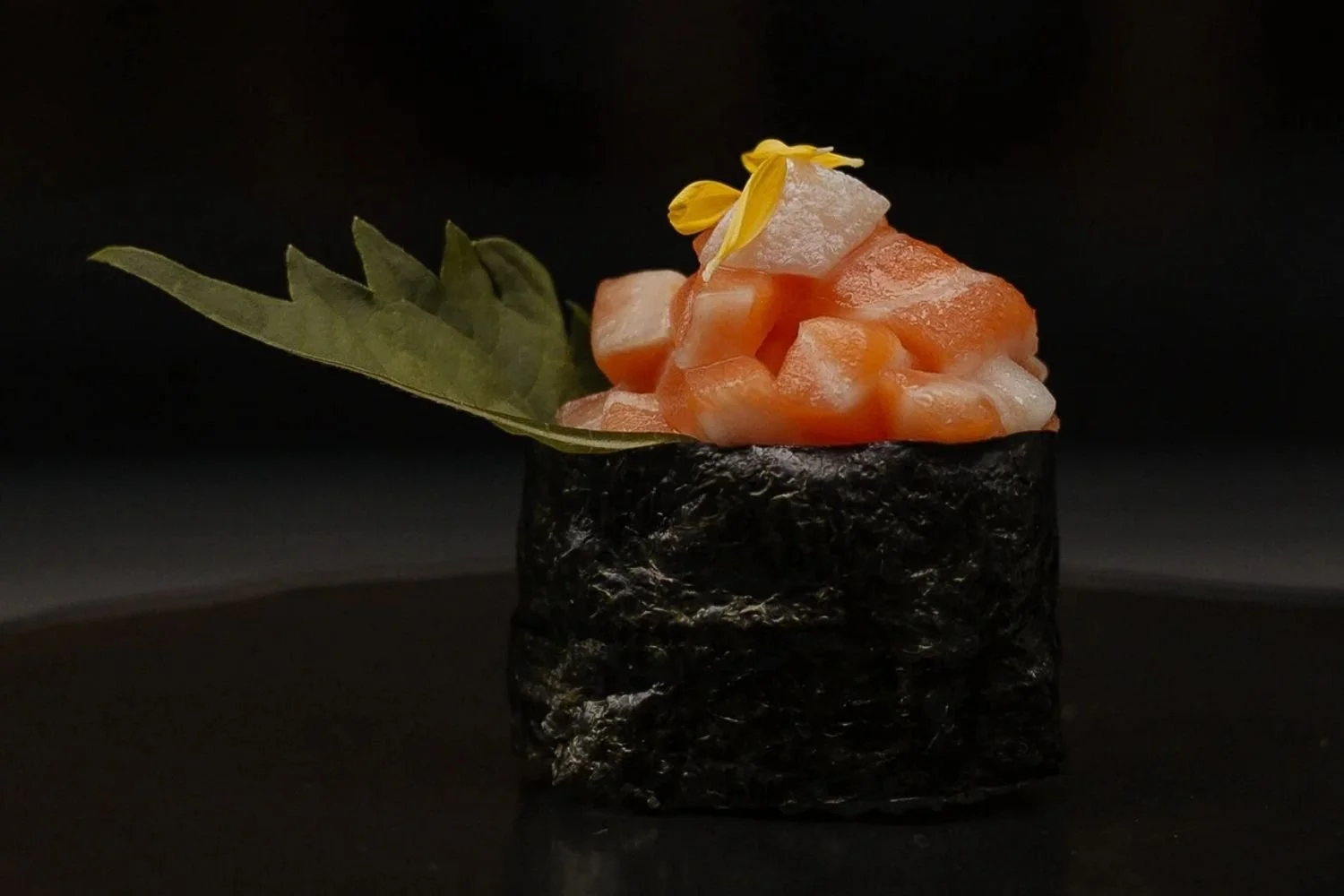
Precision in Japanese cuisine often manifests in the smallest details.
While the sprawling landscape of a sushi menu offers various textures, the Gunkan remains one of the most intellectually and technically significant preparations. It is a vessel built by necessity. It is an architectural solution to a culinary problem.
Most diners recognize the dark, towering walls of seaweed that define this style, yet the logic behind its construction is rooted in the preservation of flavor and form. At its core, this preparation is about containment. It allows for the service of ingredients that are too fluid, too small, or too delicate to survive the traditional hand-pressed techniques of nigiri.
In the context of a refined dining experience in Montréal, understanding the Gunkan is essential for anyone looking to move beyond basic rolls. It is a bridge between the ocean and the palate. It provides a platform for the rarest delicacies available in the sea. This style of sushi does not just hold food. It protects it.
What Is Gunkan Sushi
To understand the physical nature of this dish, one must look at the mechanics of its assembly.
Gunkan sushi is a specific sub-category of nigiri. It begins with a hand-formed, oblong mound of seasoned rice. Instead of laying a slice of fish directly across the top, the chef takes a wide strip of toasted nori seaweed. This strip is wrapped around the circumference of the rice. The height of the seaweed exceeds the height of the rice by nearly a centimeter. This creates a hollow, protective cup at the top of the piece.
The resulting structure is then filled with various toppings.
This method is the primary way that chefs serve semi-liquid or loose ingredients. Without the high walls of the nori, items like sea urchin or salmon roe would simply slide off the rice and onto the plate. The rice serves as the foundation. The nori serves as the structural wall. The topping serves as the centerpiece. It is a three-part harmony that relies on the crispness of the seaweed to maintain its integrity.
The Meaning of Gunkan and Battleship Sushi
The linguistic roots of the dish are as functional as the dish itself. The gunkan maki meaning translates directly to "warship roll" or "battleship roll." When viewed from a profile perspective, the dark, oval silhouette of the seaweed-wrapped rice closely resembles the hull of a naval vessel. This visual shorthand is why you will frequently hear battleship sushi explained in nautical terms.
The history of the "battleship" is relatively modern in the timeline of Japanese culinary history. It was invented in 1941 at the Kyubey restaurant in the Ginza district of Tokyo. Before this moment, certain ingredients were considered too messy or impractical for a formal sushi setting. The creation of the Gunkan changed the industry. It allowed for the introduction of luxury items that are now considered staples of the high-end experience. It turned ingredients that were once seen as garnish into the main event.
How Gunkan Fits into Sushi Menu Terms
Helming a professional menu requires a grasp of specific sushi menu terms to ensure the meal flows logically from light to heavy. Gunkan is often served toward the middle or end of the nigiri progression. This is because the toppings used in this style are typically the richest and most flavor-dense items available.
Gunkan vs Nigiri
The primary point of friction in the gunkan vs nigiri debate is the presence of the nori. Traditional nigiri is an exercise in minimalist balance. It relies on the natural drape of a solid fillet over a bed of rice. It is open to the air on all sides. Gunkan is an exercise in structural engineering. The nori wall is a hard requirement for the ingredients it houses. While nigiri highlights the grain and "snap" of a fish fillet, Gunkan focuses on the creaminess and intensity of loose textures.
Gunkan vs Maki
When examining gunkan vs maki, the difference is found in the orientation of the ingredients. Maki refers to rolls where the rice and fillings are tightly compressed within a sheet of nori and then sliced into discs. The ingredients are hidden until the roll is cut. Gunkan is an open-faced preparation. The topping sits proudly on top, visible and vibrant. It is technically a form of "maki" because it involves the act of rolling seaweed, but it functions more like a single-serving vessel than a shared roll.
Popular Gunkan Toppings
The best gunkan toppings are those that offer a high concentration of umami and a unique mouthfeel. Because the nori wall provides such stability, the chef can experiment with textures that would be impossible in any other format.
Uni Gunkan
Uni gunkan, or sea urchin, is widely considered the ultimate expression of this style. Sea urchin has a consistency similar to firm custard or cold butter. It is harvested from the interior of the sea urchin shell and must be handled with extreme delicacy.
When placed into the battleship vessel, the "tongues" of the uni remain intact. The flavor is a complex mix of ocean brine and a deep, nutty sweetness. It is a decadent experience that requires the structural support of the nori to prevent it from dissolving before it reaches the diner.
Ikura Gunkan
Ikura gunkan features the large, translucent orange spheres of salmon roe. These eggs are usually cured in a mixture of soy sauce, sake, and dashi. The hallmark of high-quality ikura is the "pop." When the diner bites into the Gunkan, the eggs burst, releasing a cool, salty liquid that seasons the rice instantly.
The nori wall is essential here to keep the individual spheres from rolling away. It is a dish defined by contrast: the crunch of the seaweed, the softness of the rice, and the liquid explosion of the roe.
Tobiko Gunkan
For a different tactile experience, tobiko gunkan utilizes the tiny eggs of the flying fish. These are much smaller than ikura and provide a consistent, fine crunch throughout the bite. Tobiko is prized for its ability to hold flavor and color.
It is often infused with natural ingredients like wasabi to give it a sharp kick or yuzu for a citrusy finish. It is a bright, refreshing option that serves as an excellent palate cleanser between richer courses.
How to Eat Gunkan Sushi
Understanding how to eat gunkan is a sign of a seasoned diner. Because the toppings are loose, the physics of the piece are delicate. One wrong move can result in the loss of expensive ingredients.
The Soy Sauce Dilemma: Never dip the top of a Gunkan into soy sauce. The loose ingredients will fall into the dish. Instead, dip a piece of pickled ginger into the sauce and use it as a brush to coat the topping. Alternatively, you can dip the very bottom edge of the rice into the sauce for a split second.
The Single Bite Rule: Gunkan should be eaten in one single bite. Attempting to bite it in half will cause the nori wall to collapse and the contents to spill. The goal is to experience all layers—the topping, the rice, and the seaweed—simultaneously.
The Timing Factor: Seaweed is highly hygroscopic, meaning it absorbs moisture rapidly. As soon as the chef places the Gunkan on the counter, the nori begins to soften from the warmth of the rice and the moisture of the topping. To enjoy the intended "snap" of the nori, you should eat the piece within seconds of it being served.
The Role of Gunkan in a Curated Menu
At RYU, we prioritize a "curated menu of traditional Japanese dishes each elevated with a modern touch." This philosophy is perfectly encapsulated in our Gunkan offerings. We do not view the battleship style as a mere carrier for roe. We view it as an opportunity to showcase the highest quality sustainable seafood.
Our Toro Experience is a prime example. While many guests are familiar with the fatty belly of the bluefin tuna as a nigiri slice, serving it in a gunkan format, often chopped and mixed with scallions or truffle, allows the richness of the oil to coat the rice more effectively. This is the essence of a chef-driven menu. We take a traditional form and use it to maximize the flavor potential of the ingredient.
Sourcing and Sustainability
The quality of a Gunkan is entirely dependent on the freshness of its components. Because the toppings are served raw and often without heavy seasoning, there is nowhere for subpar ingredients to hide. At RYU, we pride ourselves on sourcing. We use sustainable salmon and premium products from the Toyosu Market in Japan.
The nori we use is of the highest grade. It is toasted to a specific point to ensure it provides that essential structural snap. The rice is seasoned with a proprietary blend of vinegar to provide a bright acidity that cuts through the fatty richness of uni or the saltiness of ikura. This level of detail is what separates a standard meal from a premium sushi experience.
Enhancing the Culinary Journey
To truly appreciate the nuances of the Gunkan, we recommend utilizing the "enhancements" section of our menu.
Fresh Japanese wasabi offers a clean, floral heat that is vastly different from the powdered versions found elsewhere. It highlights the sweetness of the fish rather than masking it.
Pairing your meal with the right beverage is equally important. Our wine and sake list is carefully selected to complement the high umami content of our dishes. A dry, crisp sake can act as a bridge between the briny notes of the seaweed and the rich creaminess of the sea urchin.
For those looking for a more modern pairing, our cocktail program features Japanese-inspired flavors that balance acidity and sweetness.
The Legacy of the Battleship
The Gunkan remains a symbol of Japanese culinary ingenuity. It is a reminder that tradition is not static. It evolves to solve problems and to bring new flavors to the table. By creating a warship out of rice and seaweed, the chefs of the past opened a door to a world of texture that we continue to explore today at RYU.
Our commitment to this craft is visible in every piece we serve. From the way the rice is packed to the height of the nori wall, we honor the functional beauty of the battleship sushi. We invite you to experience this precision firsthand at either of our Montréal locations.
A Destination for Refined Sushi in Montréal
RYU offers a space for discovery. Our commitment to sustainability, quality, and design ensures that every visit is more than just a meal. It is an exploration of Japanese culture through a modern lens.
Our Peel Street location remains open from lunch through dinner, providing a sophisticated escape in the heart of the city. In Griffintown, we offer a dinner experience that is perfect for social occasions or quiet, focused meals.
We encourage you to book a table through our website to ensure you have a seat at the bar where you can watch the precision of our chefs as they construct each Gunkan with care.