
Sushi Roll vs Hand Roll: Everything You Need to Know Before You Order at RYU
Choosing between a sushi roll vs hand roll is not a trivia question. It is a pacing decision. One option spreads the meal across the table and across time. The other tightens the experience and asks you to eat with intention.
Guests often assume the difference comes down to preference or appetite, but the real distinction shows up in texture, timing, and how the kitchen expects you to interact with what arrives.
This guide explains sushi roll vs hand roll in practical terms so you know what to order when you visit us at RYU Peel or Griffintown. It covers every format — maki, temaki, hosomaki, uramaki, gunkan, nigiri, chirashi — explains why they are served differently, and gives you a clean ordering strategy that works for dinner service and for late night dining.
No history detours. Just what matters when you are reading the menu and deciding how you want the night to unfold.
What Is a Sushi Roll?
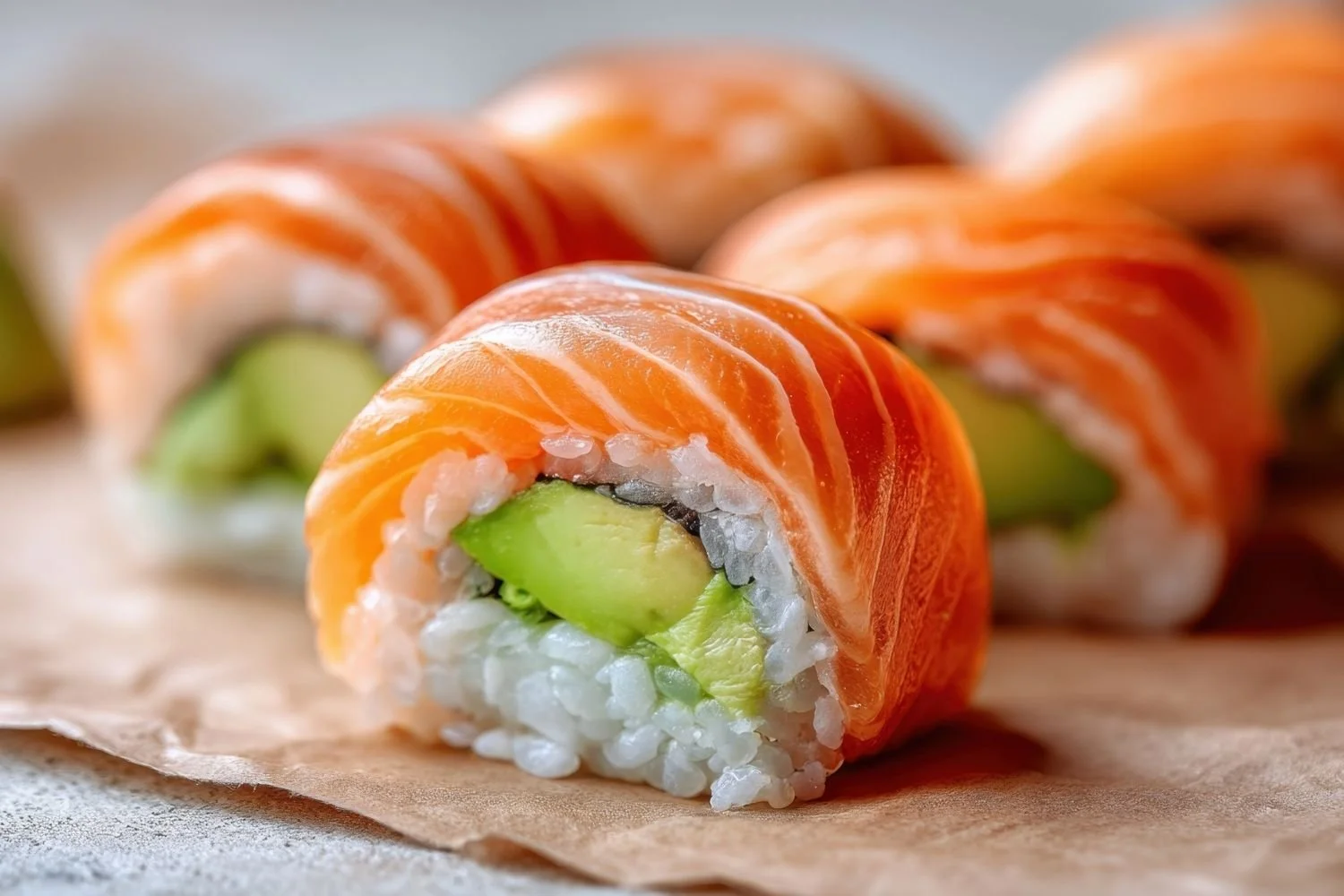
A sushi roll is shaped with a bamboo mat, tightened into a clean cylinder, then cut into individual pieces before it reaches the table. This structure gives the roll stability, consistent size, and a rhythm that fits shared dining. You eat sushi rolls with chopsticks, and you can pause between bites without compromising texture or balance.
When people refer to types of sushi rolls, they are talking about variations on this same structure:
Hosomaki are slim rolls with a single filling and a higher rice to fish ratio. Cucumber, salmon, tuna. Simple, balanced, and light. Clean entry points into a meal.
Futomaki are larger and layered, built with multiple fillings and sauces. They offer contrast with every bite and suit guests who want richness without committing to multiple dishes.
Uramaki place the rice on the outside, which allows for toppings — torched fish, tobiko, sauces, or richer garnishes that sit cleanly on each piece. Most specialty and chef maki at RYU are built on this structure.
Sushi rolls operate as table pieces at RYU. Signature maki, chef maki, and classic maki are designed to hold temperature and structure while drinks circulate and plates rotate. A roll can sit for a few minutes without losing its integrity. That stability makes sushi rolls the natural choice for the opening phase of a meal or for groups ordering several items at once.
What Is a Hand Roll?
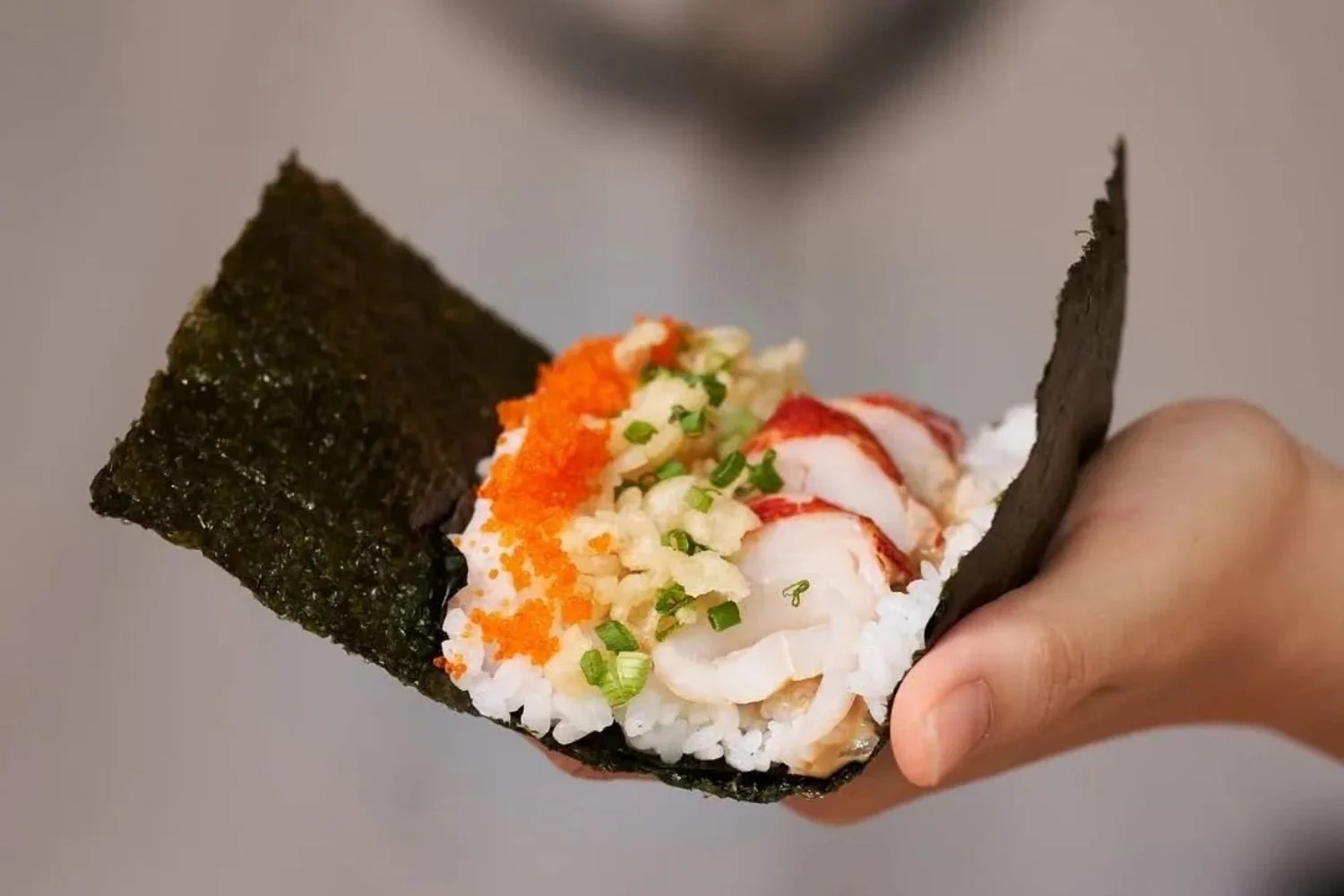
A hand roll — called temaki in Japanese, where te means hand and maki means roll — is formed entirely by hand and shaped into a cone or open tube. It is not cut. It is served whole. It is eaten with your hands. The goal is immediacy rather than presentation.
The word describes the method as much as the result. A half sheet of nori is laid flat, filled with seasoned sushi rice and a chosen ingredient, then shaped by hand into a cone — open and generous at the top, tapering to a clean point at the base.
What makes temaki hand roll sushi different from everything else on a Japanese menu is its relationship with time. The moment the nori meets the rice, a clock starts. Moisture travels slowly from the filling outward. The seaweed — crisp and faintly saline when it leaves the kitchen — begins to soften within minutes. A great temaki eaten at the right moment has a texture that no sliced roll can replicate: the clean snap of taut nori giving way to cool rice and a rich, yielding centre.
Eat it late and that contrast is gone.
This is why temaki is never plated in advance. It is assembled to order, handed across the counter or set directly in front of you, and meant to be picked up within seconds of arrival. The entire experience is built around immediacy — around the brief window between perfect and diminished.
Hand rolls carry a different tone from rolls on a plate. They are personal and focused. A hand roll does not wait. It rewards decisiveness.
Sushi Roll vs Hand Roll at a Glance
FeatureSushi RollHand RollShapeCylindrical and tightly rolledCone or open tube formed by handHow it is servedCut into multiple pieces on a plateServed whole as a single pieceHow you eat itWith chopsticksWith your handsBest timingEarly or mid-mealLate in the meal or when ready to eat immediatelyNori textureStable and compressedCrisp at first, softens quicklyShareabilityBuilt for sharing across the tablePersonal and not meant to be sharedPacingSupports a slower, social rhythmEncourages focused, immediate eatingAt RYUSignature maki, chef maki, classic rollsBaked crab handrolls, grab hand rolls, toro tartare hand roll
The Full Guide to Sushi Formats
Beyond the roll vs hand roll decision, understanding every format on a Japanese menu helps you order with intention rather than by process of elimination.
Nigiri
Nigiri sits at the centre of RYU's craft. Hand-pressed rice topped with fish, often brushed with soy or a whisper of citrus. No sauces layered to hide imperfections. No heavy garnishes. Just clean cuts of fish over carefully formed rice, each piece a quiet exhibition of craftsmanship.
At RYU: Ora King Salmon torched to a light char, finished with miso sabayon and jalapeño. Chutoro — medium-fatty tuna marbled like velvet. Uni Gunkan, sea urchin held in a nori cradle, creamy and saline. The Toro Experience — a sequence of Akami, Chutoro, and Otoro, three textures of Bluefin tuna in one clean progression.
Nigiri is where the chefs work quietly. Hands steady. Movements unspoken. Each placement of fish carries intention.
Gunkan
Known as battleship sushi. A small oval of rice wrapped in a strip of seaweed and filled with ingredients that need structure — uni, ikura, scallop. The nori wall holds everything in place. One of the most structurally precise formats on the menu.
Temaki — The Hand Roll in Detail
Assembly is fast and deliberate. The nori sheet is held in one hand, flat and dry. Rice is placed diagonally across the lower half, pressed lightly but not compacted. The filling is layered across the rice at an angle, positioned so it sits at the wide opening of the cone once the roll is shaped. The nori is then wrapped from one corner across, forming the cone with a motion that requires no tools — only practice and a steady hand.
Open style vs traditional temaki: Traditional temaki comes to a tight point at the base. Compact, structured, self-contained. Open style temaki is more relaxed — the top wider, more generous, the filling visible and slightly overflowing. The choice between them is often the kitchen's, made based on the filling and the experience they want you to have. Both are built on the same principle of immediacy.
At RYU: Classic handrolls in Bluefin Toro, Hamachi, Scallop, and Cucumber. Specialty grab handrolls in Spicy Tuna and Tempura, and Negitoro Nikiri. The Baked Crab Handroll as a warm opener. Each one assembled to order, served without ceremony.
Chirashi
A bowl of seasoned rice topped with sashimi, vegetables, or roe. Loose, generous, and often eaten with a spoon. At RYU, the Toyosu selection turns Chirashi into something else entirely — fish sourced from Japan, each piece draped over seasoned rice that still holds warmth. The flavour deepens as the rice cools, turning every bite into a small meditation.
Oshizushi
Pressed sushi from Osaka. Layers of rice and fish shaped in a wooden mould, compacted, then sliced into clean rectangles. Every bite feels architectural — like the structure of flavour itself. Precise and beautiful.
Inari
Sweet tofu pockets filled with sushi rice. A gentle contrast to raw fish dishes. Mild, slightly sweet, and a quiet moment in an otherwise bold menu.
The Fillings That Define Each Format
The types of fish used define the entire sushi experience. Each carries a different texture, fat level, and flavour tone.
Tuna (Maguro): Deep red and clean. Akami for lean, Chutoro for marbled, Otoro for rich and buttery.
Salmon (Sake): Smooth and sweet with subtle oils. Ora King salmon offers the highest quality available.
Yellowtail (Hamachi): Firm and mild with a whisper of citrus. Best served raw in thin cuts.
Scallop (Hotate): Silky, tender, almost translucent. A whisper of sweetness that lingers.
Sea Urchin (Uni): Creamy and briny. Like tasting the edge of the ocean.
Shrimp (Ebi): Cooked, sweet, slightly crisp. A gentle counterpoint to the raw menu.
The best hand roll fillings specifically share a few qualities: they hold temperature well, they have enough fat or moisture to contrast the dry mineral edge of nori, and they do not require too much chewing — which would compromise the pace of eating a cone held in your hands. Bluefin toro, hamachi, scallop, and cucumber all work for these reasons.
Nori, Freshness, and Why Timing Matters
Nori is unforgiving once it absorbs moisture. In a sushi roll, that exchange is controlled. The seaweed is compressed against rice, protected by structure, and balanced with fillings that slow down softening. This is why sushi rolls can travel across the table and still feel composed.
Hand rolls work on the opposite principle. The nori stays exposed and dry until the final moment. Once rice touches it, the countdown begins. Crisp becomes chewy within minutes. That change is noticeable — and it is also why temaki is prepared last and delivered immediately.
RYU treats hand rolls with this timing in mind. They arrive fast and warm when applicable. Servers often place them directly in front of the guest rather than leaving them in the centre of the table. This is not ceremony. It is practical service that preserves texture.
Shareability vs Personal Serving
Sushi rolls invite shared decision-making. They suit groups that want variety, comparison, and a slower cadence. One person can take a piece, pause, then return for another without disrupting the experience for others. Rolls are ideal for first rounds, business dinners, or tables ordering multiple plates.
Hand rolls are personal servings. Once ordered, each one belongs to a specific guest. Passing it around defeats the format and ruins the texture. Handroll sushi works best when guests are ready to eat immediately and want something directed rather than communal.
At mixed tables, a common strategy is to start with sushi rolls and finish with hand rolls. This allows conversation to settle early and sharpens focus later in the meal.
How to Eat a Hand Roll
Hand roll etiquette is minimal but it matters.
Pick up the cone with both hands at the base, where the nori comes to its point. Begin eating from the wide, open top, working downward with each bite. Do not set it down between bites. Do not attempt to eat it with chopsticks — the entire architecture of temaki assumes it will be held from start to finish.
Soy sauce is optional and in most cases unnecessary. If you choose to use it, dip the edge of the nori lightly rather than submerging the cone, which would saturate the seaweed and collapse the structure before you finish eating.
The most important rule: eat it now. The window for temaki at its best is narrow and unforgiving.
How to Order Across the Full Menu
Sushi is not a race. It is a sequence. The order you eat in matters.
Start light. White fish or shellfish — hamachi, scallop, cucumber maki.
Move toward rich. Tuna and salmon for body and fat. Signature maki and uramaki.
End with focus. Uni, hand rolls, or a final piece of nigiri.
Avoid drowning pieces in soy sauce. The chef seasons each piece for balance. A small dip, fish side down, is enough. Between bites, sip sake or sparkling water to reset the palate.
For hand rolls specifically: order one or two at a time rather than several at once. Each cone needs to be eaten immediately. Ordering four and letting three sit while you finish the first is the fastest way to waste a good temaki. Ask your server which fillings are freshest that evening — at RYU the fish changes with availability and season, and the answer will often lead you somewhere better than the menu alone.
Portion Guide for Two
For two guests sharing, two to three sushi rolls create a comfortable base alongside sashimi or small plates.
For a lighter meal or late night visit, one sushi roll and two hand rolls often feel complete.
If ordering hand rolls exclusively, plan one per person at a time and reorder as needed. This keeps texture sharp and pacing controlled.
A balanced flow: sushi rolls first, sashimi or nigiri mid-meal, hand rolls last.
The Order That Never Feels Wrong
The sushi roll vs hand roll decision stops being complicated once you start thinking about pace instead of preference. Sushi rolls belong at the start of the table's rhythm, when plates circulate and conversation moves freely. Hand rolls belong at the moment when you are ready to eat without distraction and let texture lead the experience.
At RYU, both formats are intentional. Rolls give the meal structure. Hand rolls give it precision. Ordering with that sequence in mind keeps the night balanced — whether you are dining early at RYU Peel on Peel Street downtown or arriving late at RYU Griffintown on Richmond Street.
When the flow feels right, the sushi always does too.